More Of This
While I do not generally make new year's resolutions, it doesn't hurt to put some things into the "more of this" category as an intention for coming year. I'm using this ethos to get back in my newsletter groove. They may not come every week, but I hope to send more of them in 2026. I am pleased so many of you are still here and reading them. Thanks for all your kind replies on the last one.
We have been reveling in some serious down time the last few weeks. And when I say down time, I mean still mostly working. But work that feels different, slower, and that doesn't feel nearly as stressful or crippling as most of the year. Having one market day off feels so luxurious. And our whole crew took five days off over Christmas which was lovely. We had our most mellow and homey Christmas ever. Just our family and mostly just cooking and eating, listening old records and lighting candles, with a little outside time too as someone has to do the farm chores and we needed the excercise.
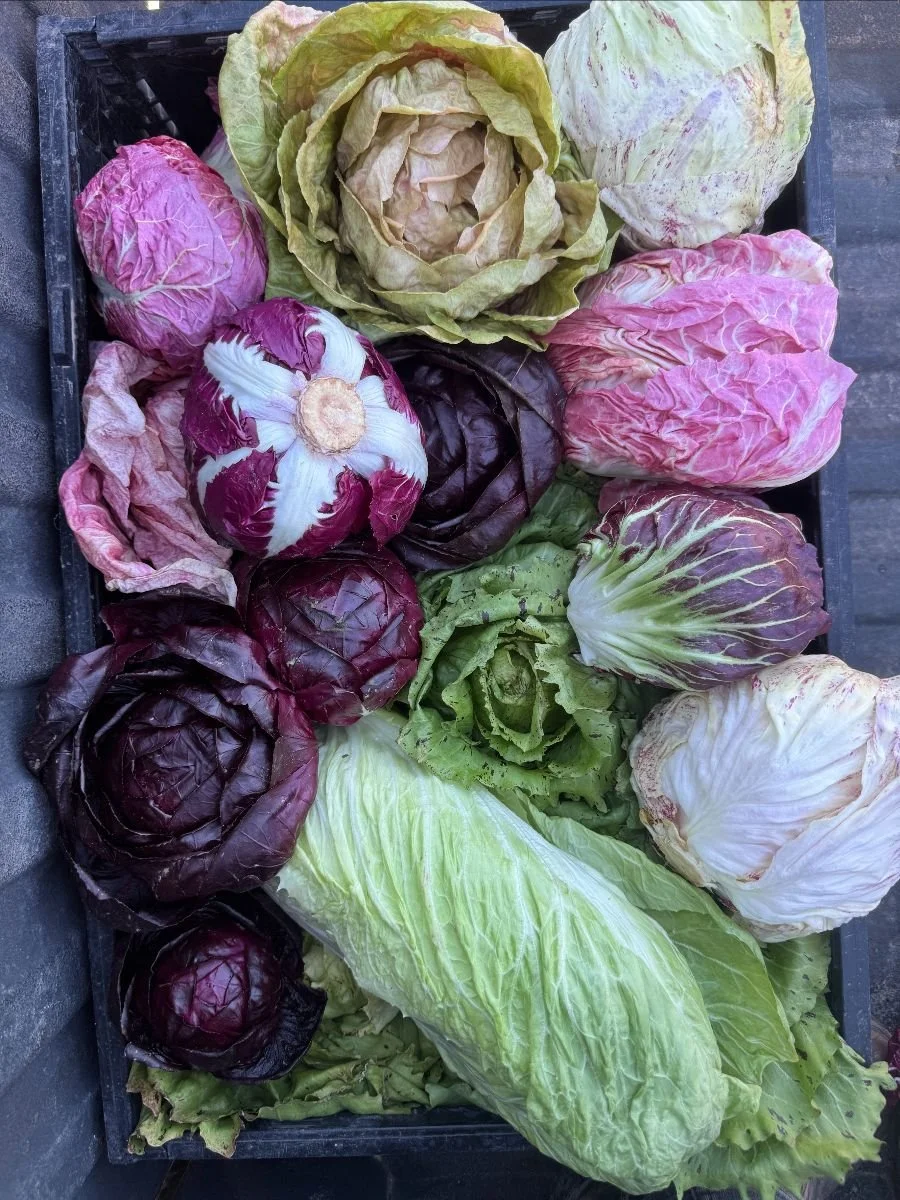
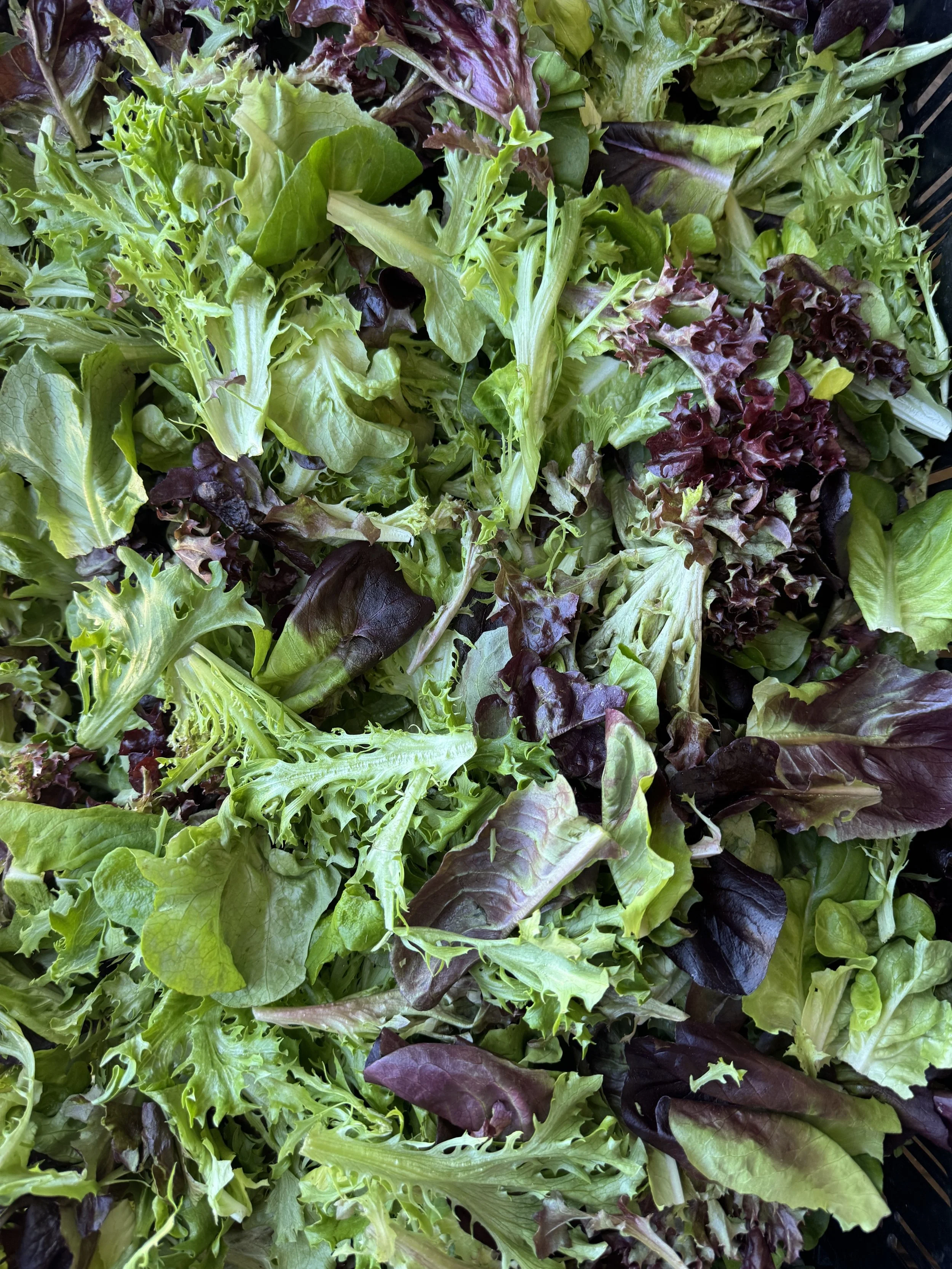
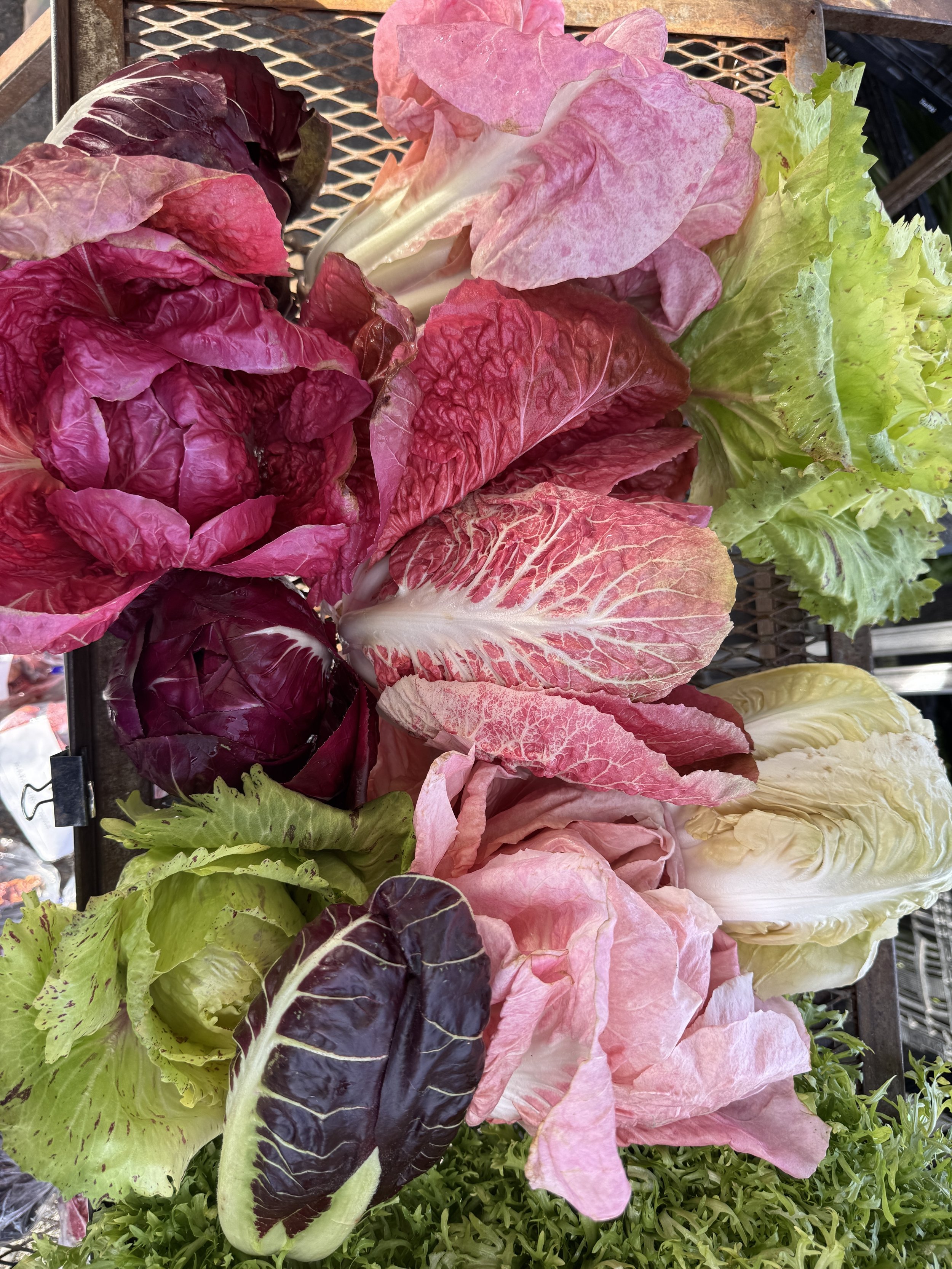
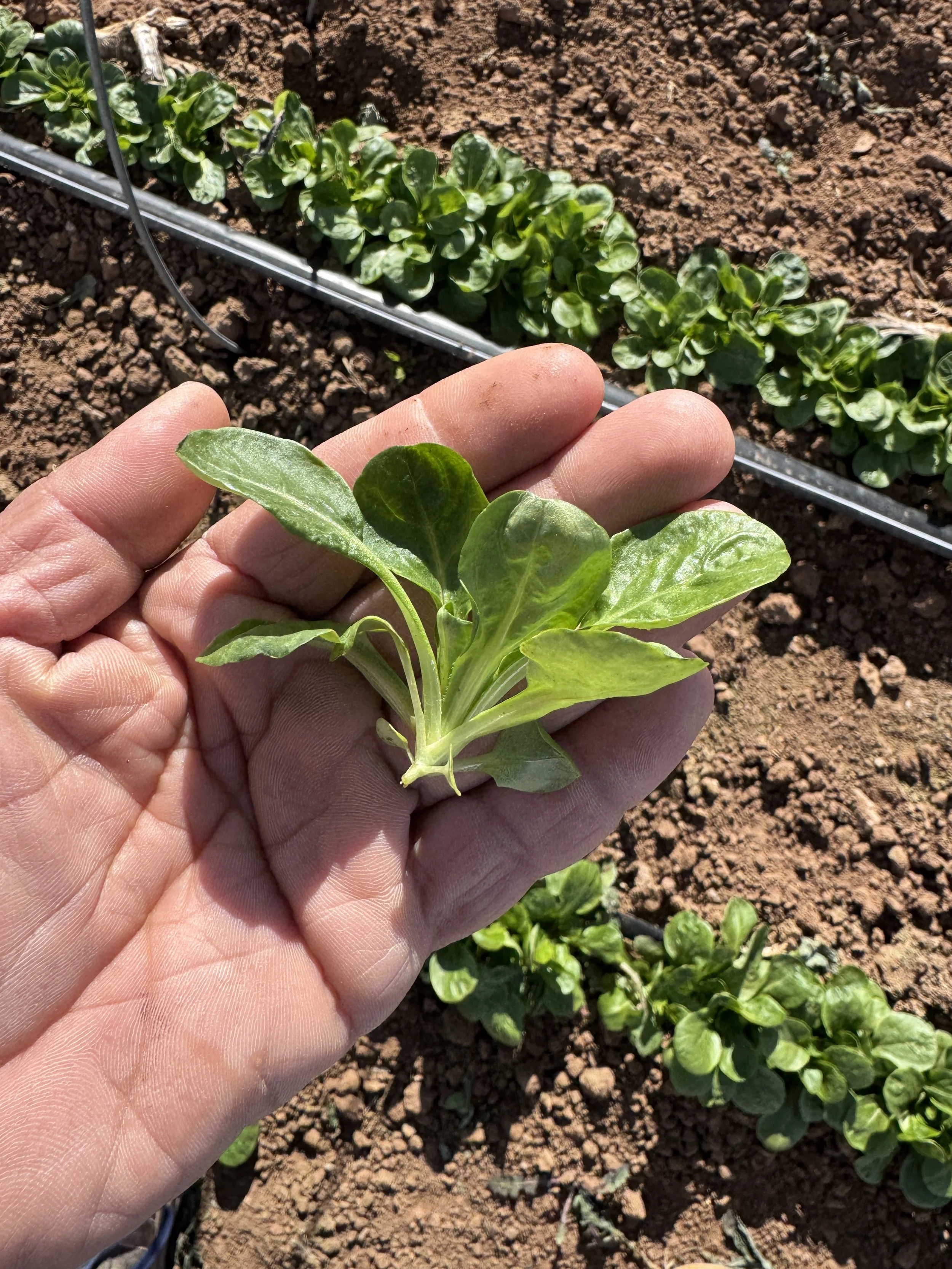
It's been fairly mild this winter and we have had quite a lot of rain. The cover crops are loving the moisture. And the milder weather means the lettuce and many of the winter crops are still thriving in the field. The spinach is superb and the chicory and radicchio are so sweet and crisp (I know they are 'bitter greens' but they are about the least bitter they will be all year). And they come in the most amazing colors, textures and forms.
I can't remember how many years we have been growing chicories now (maybe 5 or 6?) but they grow on me more and more each year. It has been quite a learning curve in how to grow them. Many of them are bred in Italy, and more recently are being expanded in the Pacific Northwest of the US. Varieties are often slated for certain latitudes (even towns) and weather conditions, none of which are really comparable here. They are mainly all seeded and planted out at the same time (a July seeding of a cool loving crop in the greenhouse is a challenge!). But they have different days to maturity and provide a cascade of harvest over the fall and into the winter, from about 60 days to 130 days with many different tolerances to heat and cold. Knowing what varieties to plant here in our climate and how to manage them has taken a lot of trial and error, and there are not many (or any?) farms in our area to look to for guidance. We get a little better each year, but are always trialing new varieties, which is fun but can be hard to keep track. Passion and determination seem to be working in this arena. And thanks to all of you for your willingness to try new things and listen to us wax on about bitter greens. I think this is a crop has wormed it's way into our hearts, so we will keep growing it.
I know most people get into major house and yard cleaning in the spring. But here on the farm we believe in winter cleaning. The farm gets in such a disarray during the busy season, so once we have a little time on our hands (like now) and are trying to keep the crew busy, we are eager to tackle those projects. We are currently in full-fledged clean up mode. While the empty fields have already been cleaned up of irrigation, row cover, trellises, etc and all put away now we are on to cleaning up junk piles, barns, equipment lines and forgotten corners. It requires a lot more decision making which can be a bit hard to delegate. Cory gets really antsy when I get into deep cleaning mode. We have very different ideas of what will be useful some day vs. this clutter is overtaking my life. But we have to strike a balance between saving everything for all of eternity in complete disorder and staying clean and organized for our sanity and functionality. We will make it through the other side, hopefully with some organized spaces we aren't so embarrassed by, but plenty of 'stuff' to see us through many a future project. I hope to send some before and after photos in the next newsletter.
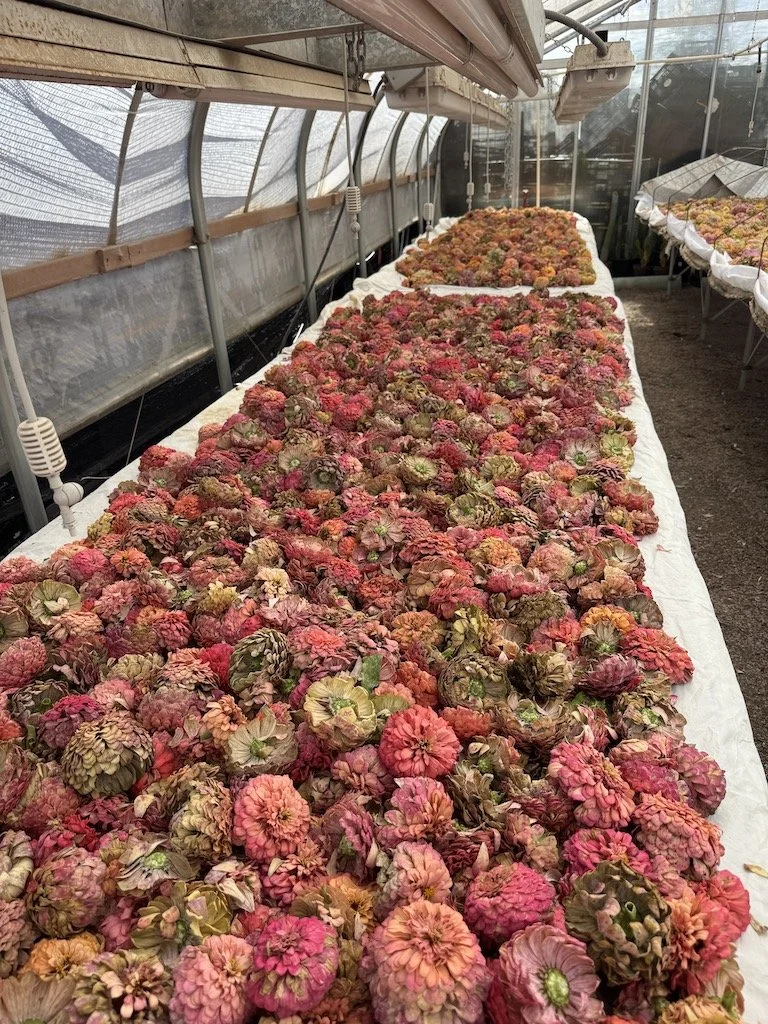
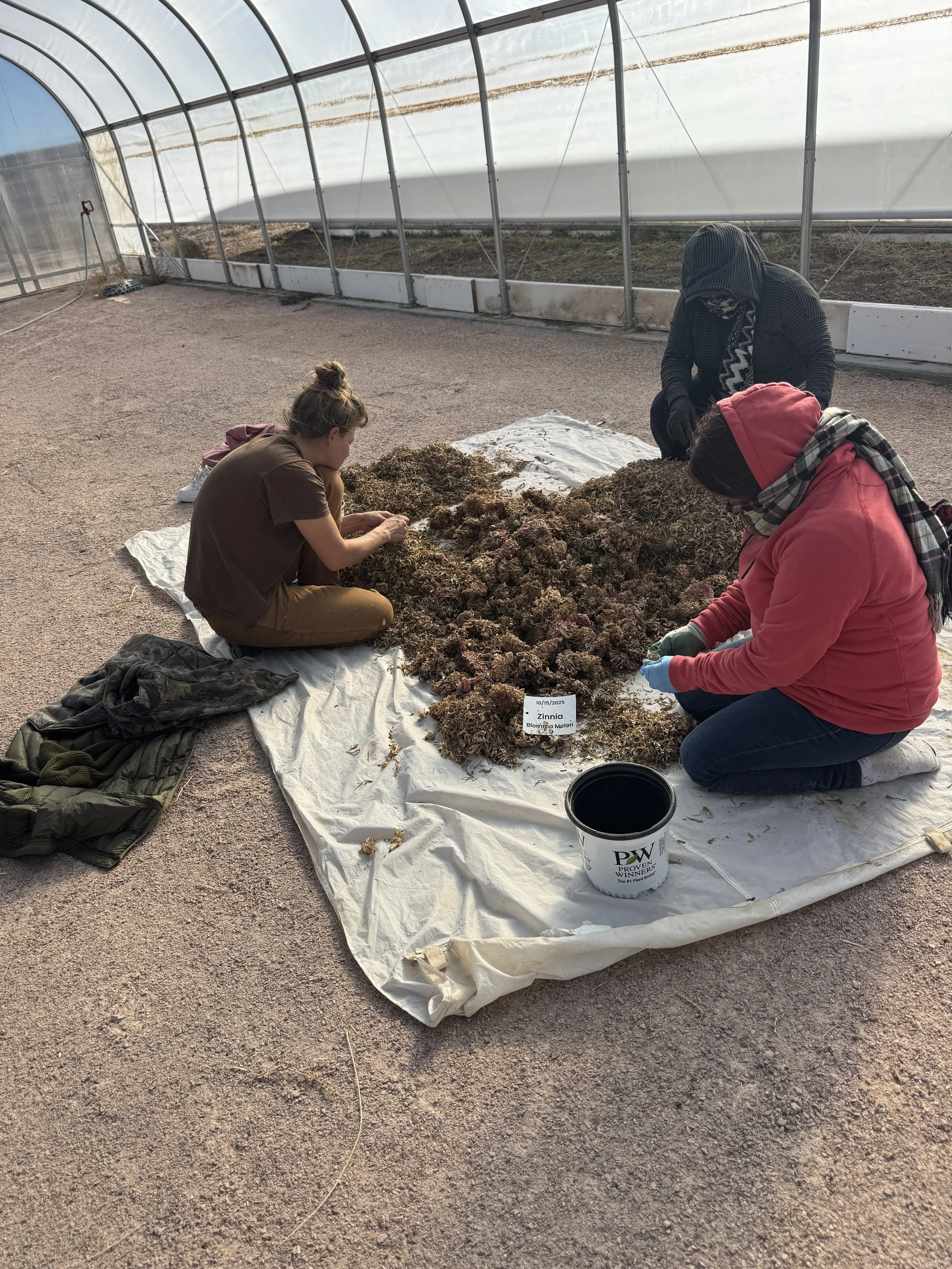
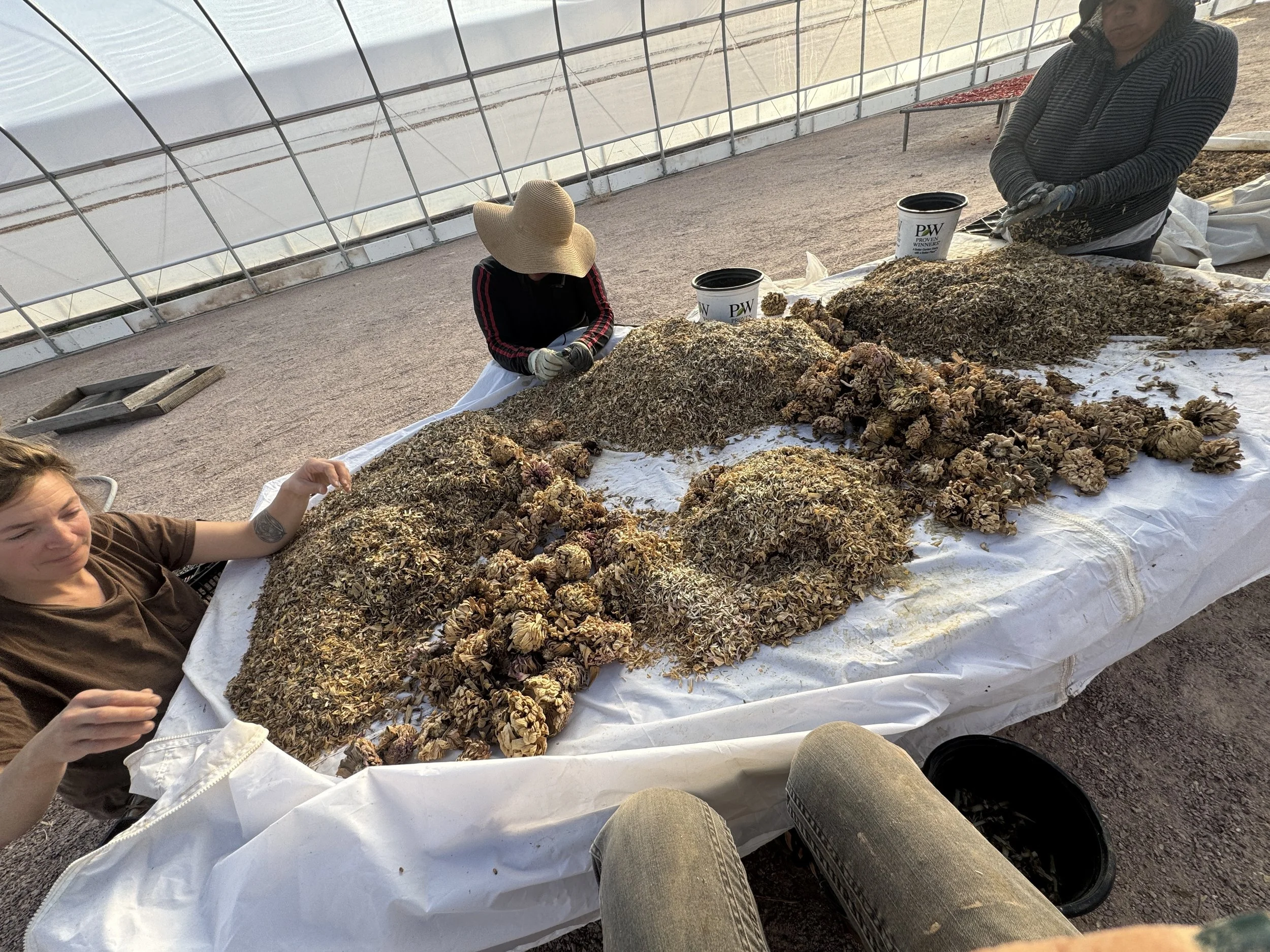
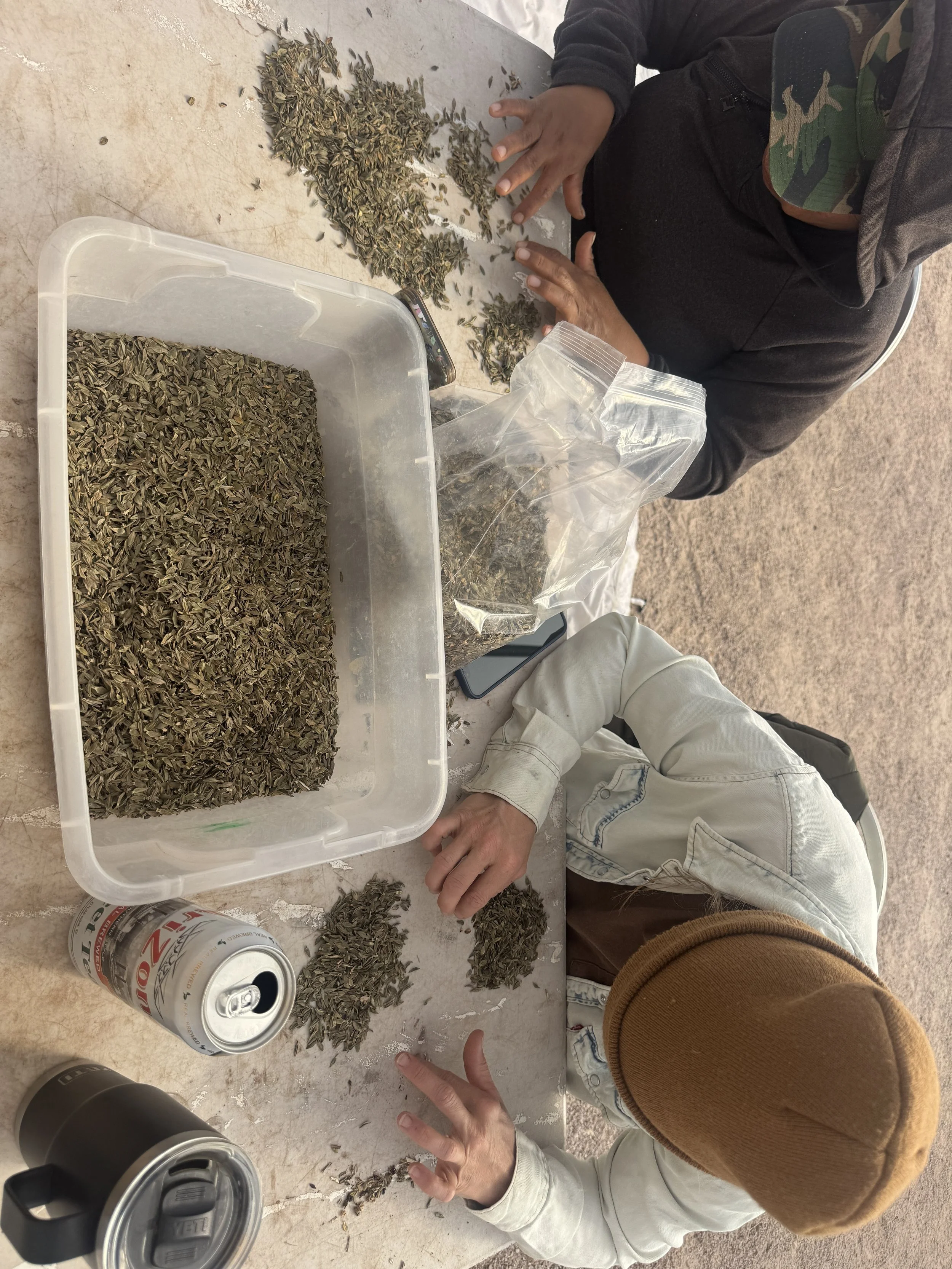
We have also been cleaning lots of seed the past few weeks. We did a few different contract seed grow outs - mainly zinnias (6 varieties) and sweet peas (14 varieties). As well as just some stuff we like to grow and save for our own farm use.
Sweet peas are fairly easy to grow in that they don't cross pollinate, so different varieties can grow safely side by side, though they do require trellising. The sweet peas are a bit tedious to harvest as they mature over quite a long time and need to be collected several times a week to not lose seeds that shatter and drop on the ground. But the cleaning of the seeds is super easy; large, heavy seeds versus very light chaff making winnowing with a fan and screens a quick process.
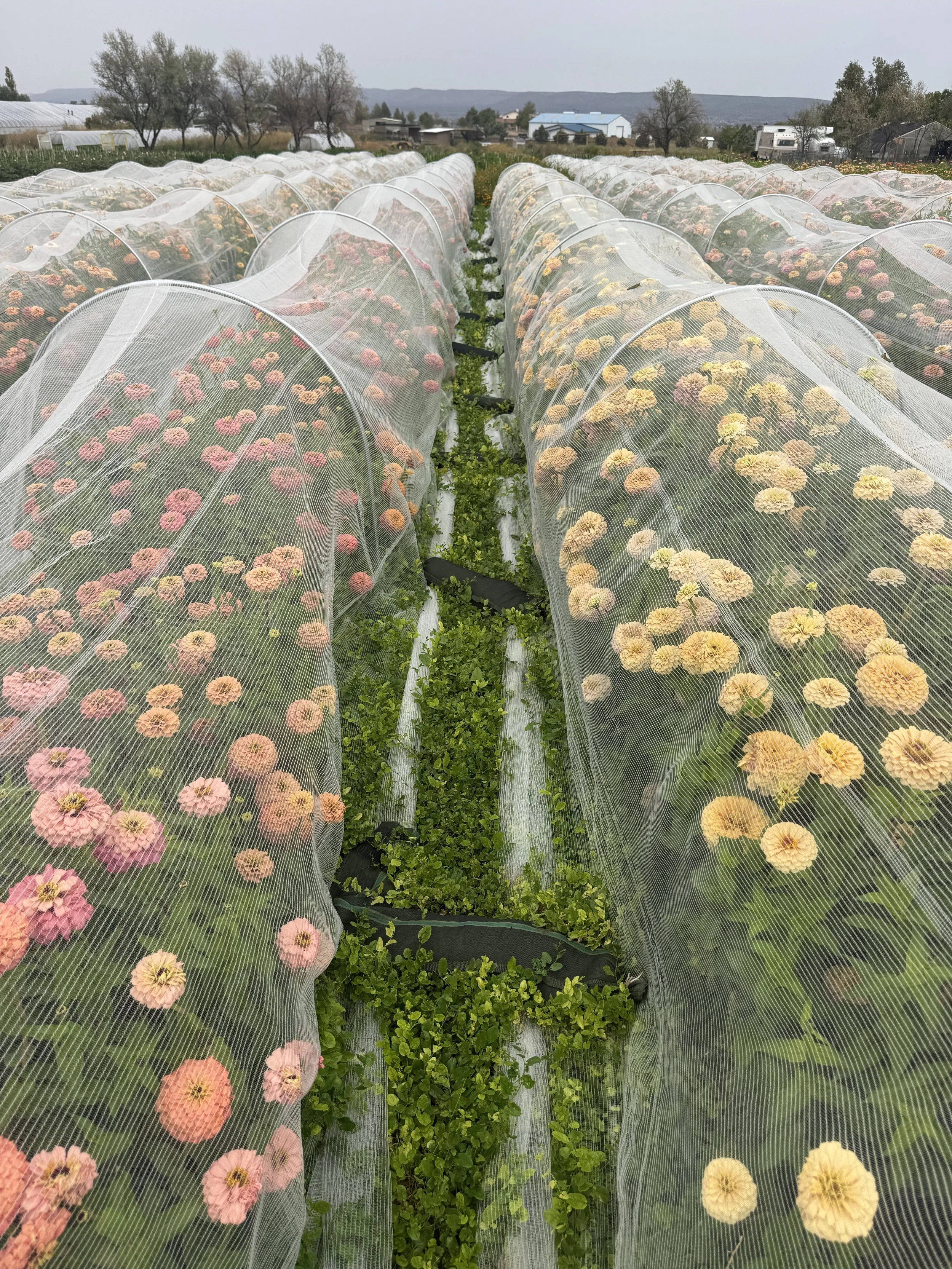
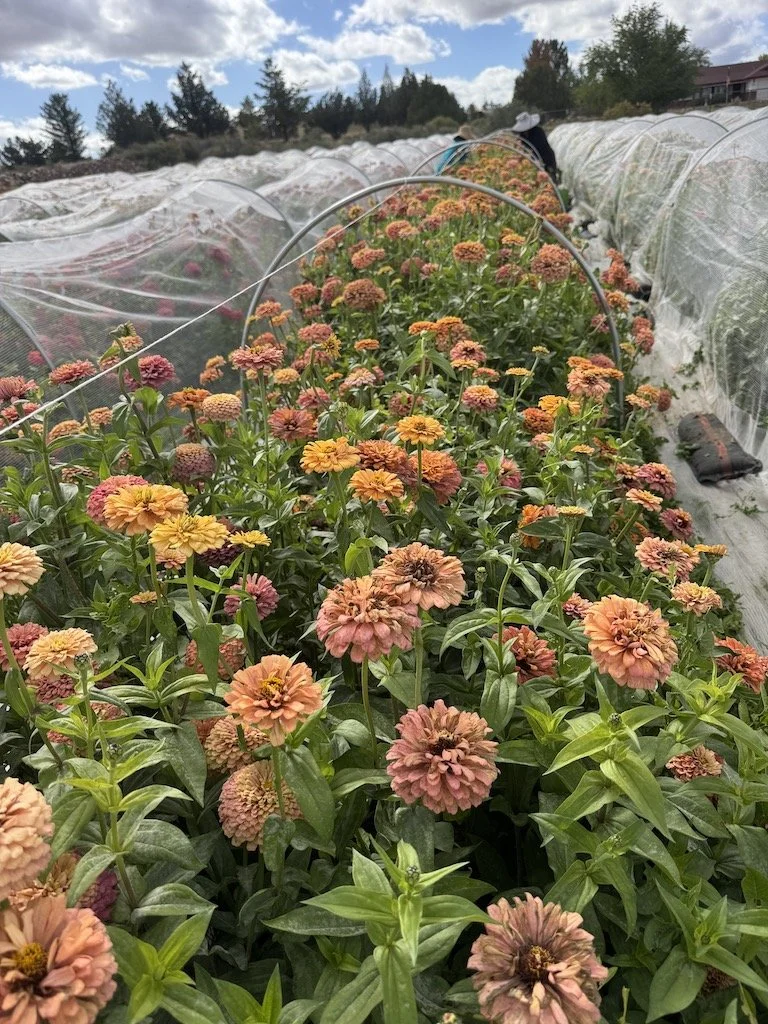
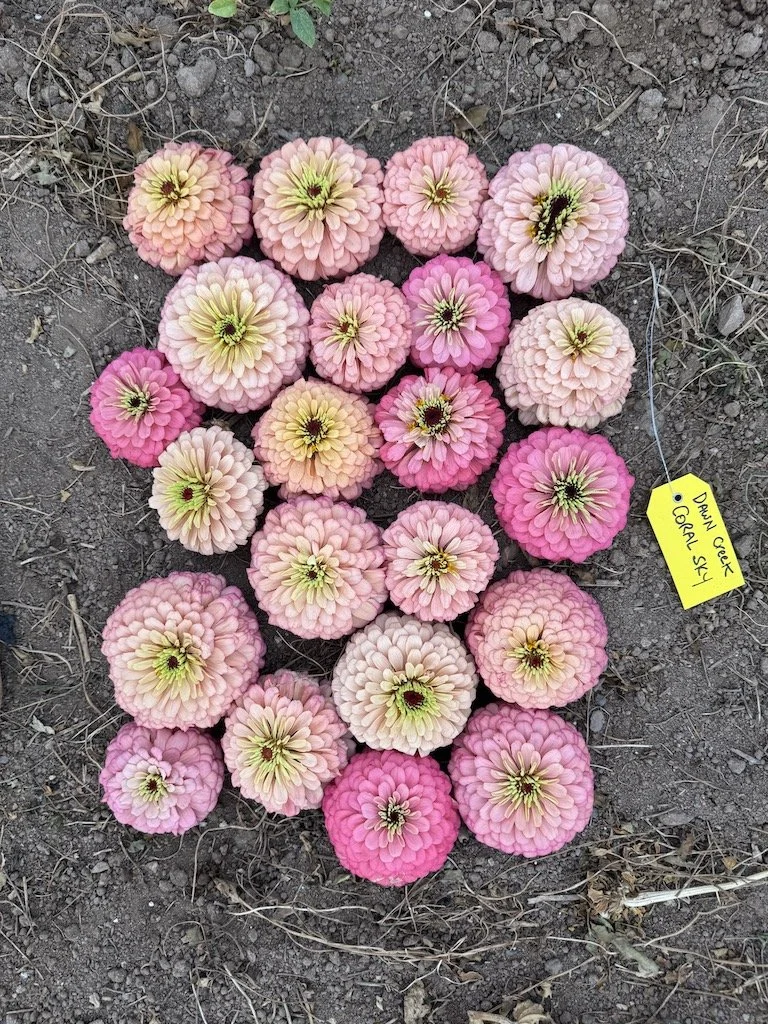
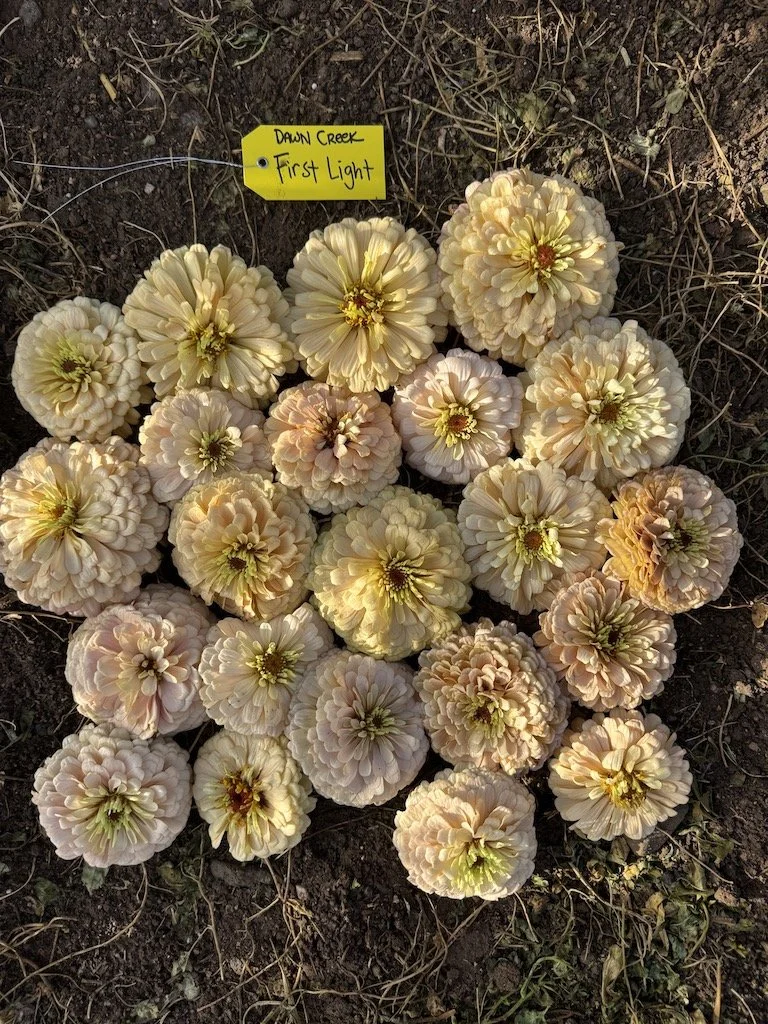
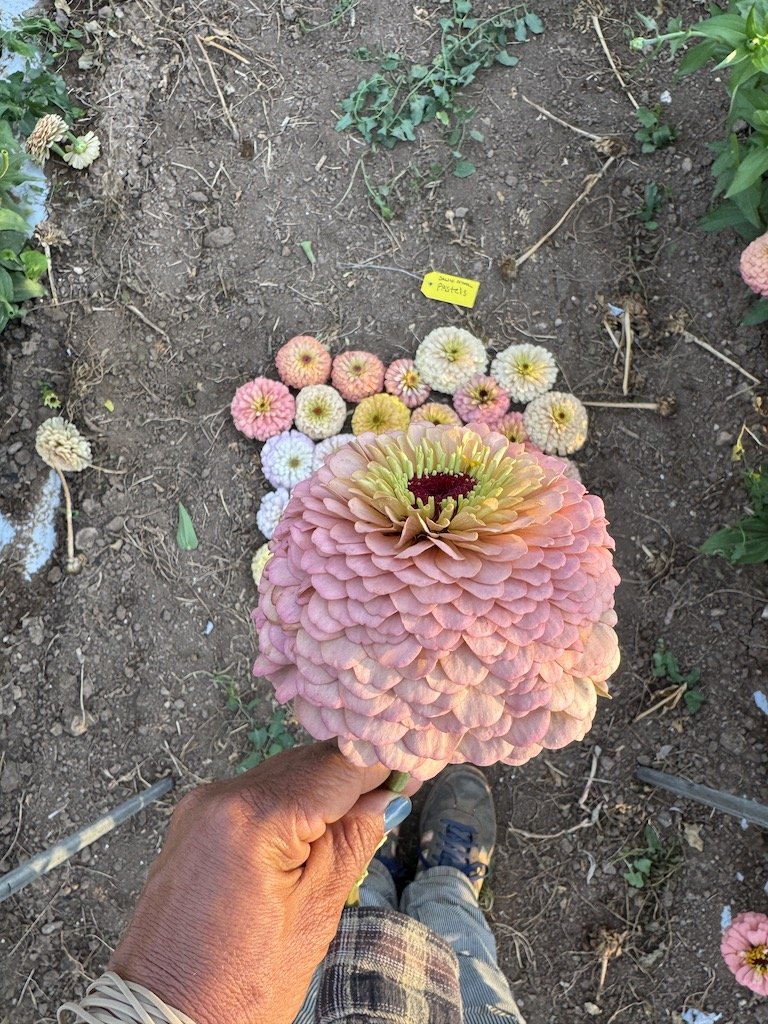
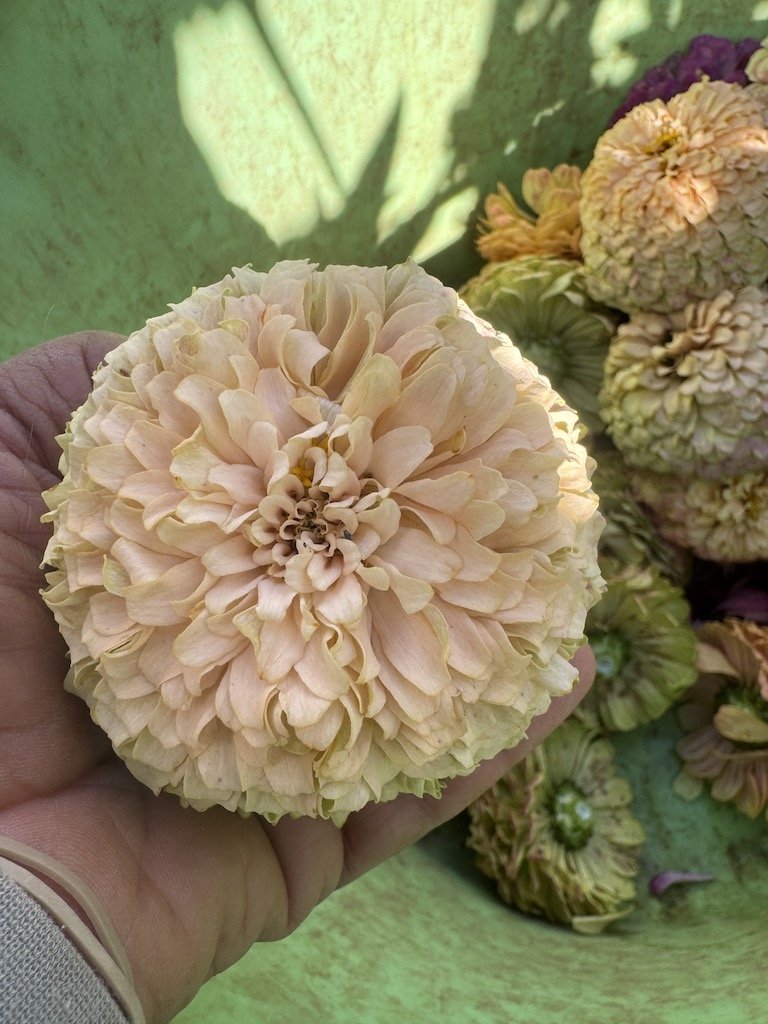
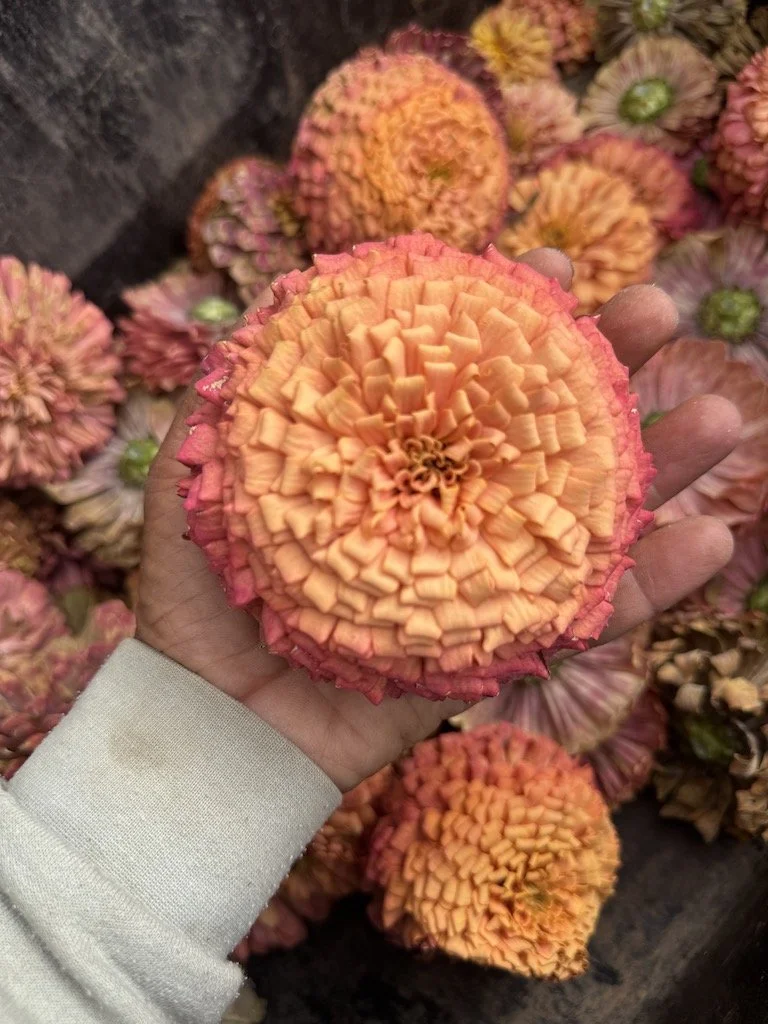
Zinnias, on the other hand, will cross with each other, so each variety needs to be isolated (in our case with low tunnels and insect netting with additional pollinators). We harvest the flower heads once mature only a few times as they can hold on the plants for quite some time. But cleaning the zinnia seeds is a whole other story. The seeds are light and oddly shaped with a lot of variability that can easily catch in the wind (and wind from fans is one of our main seed cleaning tools). It is a very time consuming and often frustrating process, but the flowers are so beautiful and unique they really lure you in. We did learn a lot this year and It feels like a huge win to done with that project for now. If you are interested in how to clean zinnia seeds, check out Blomma Flower Farm on Instagram, scroll back to October. She is one of the people we grew seed for and she has developed some very cool specialized set ups for cleaning zinnia seeds. She also talks a lot about zinnia breeding. While you're at it, check out Dawn Creek Farm as well. We grew out five varieties this year for seed of zinnias she has been breeding on her farm, each one was so incredible. And she should be having a seed sale sometime this winter/spring.
I also spent the Christmas break working on our big seed orders for the year. I still have a bit more to go, but they are mostly done. I used to love thumbing through seed catalogs as they arrived in winter. But now I find this a very arduous process, requiring about a week's worth of time staring at the computer screen, doing a lot of math, price comparisons, hard decision making and lots of educated guesses on the year to come. But each step of the process is part of what makes the whole farm wheel turn. I am so grateful for how it all somehow magically (or painstakingly) comes together each year.
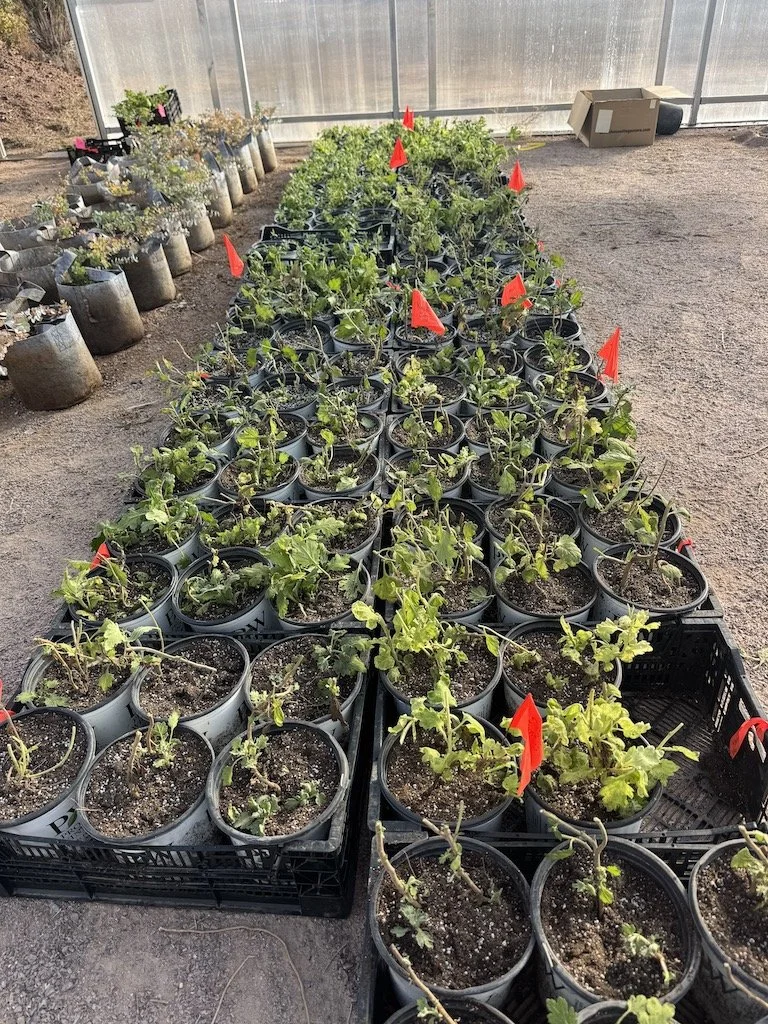
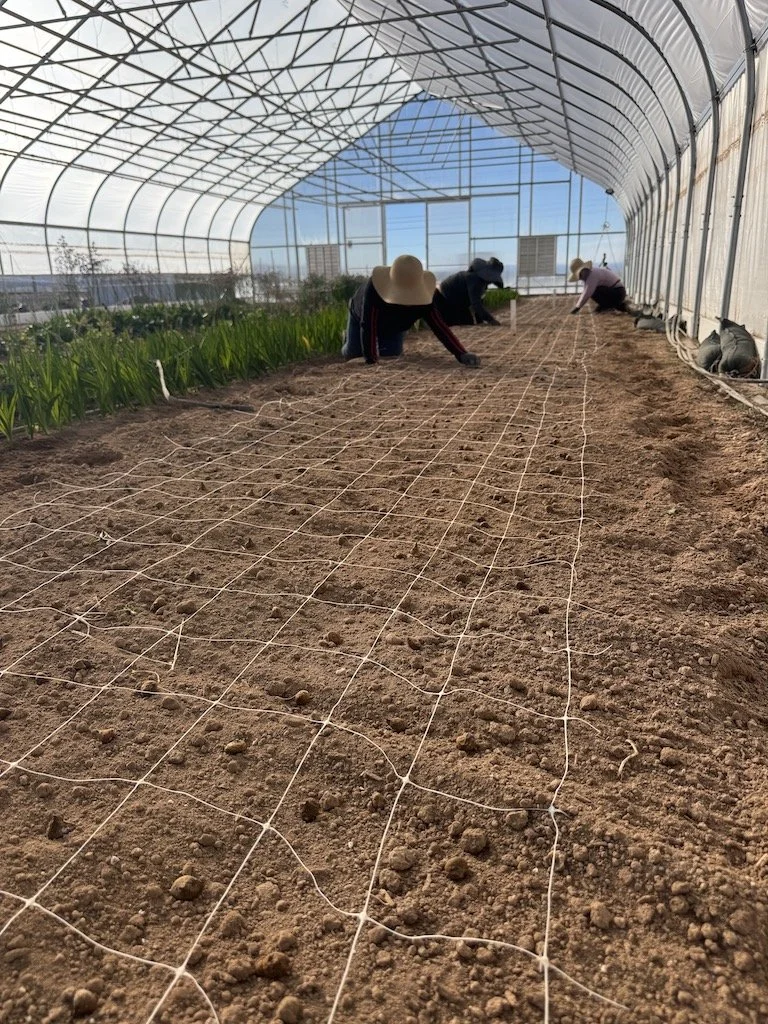
Other things that have kept us occupied over the last several weeks. Finishing the digging, dividing and storage of around 15,000 dahlias. Smoking, drying and roasting chiles. Planting tulips. Digging and potting up mums to be our mother plants for propagation (what we will take this year's cuttings from). I love how many different forms our plants come in. Seeds, tubers, bulbs, root stock, cuttings.
Happy new year everyone!
Shanti and the Whipstone crew